Gelcoat Repair: How to Fix Chips, Cracks & Fading
Gelcoat Repair: How to Fix Chips, Cracks & Fading on Fiberglass Boats
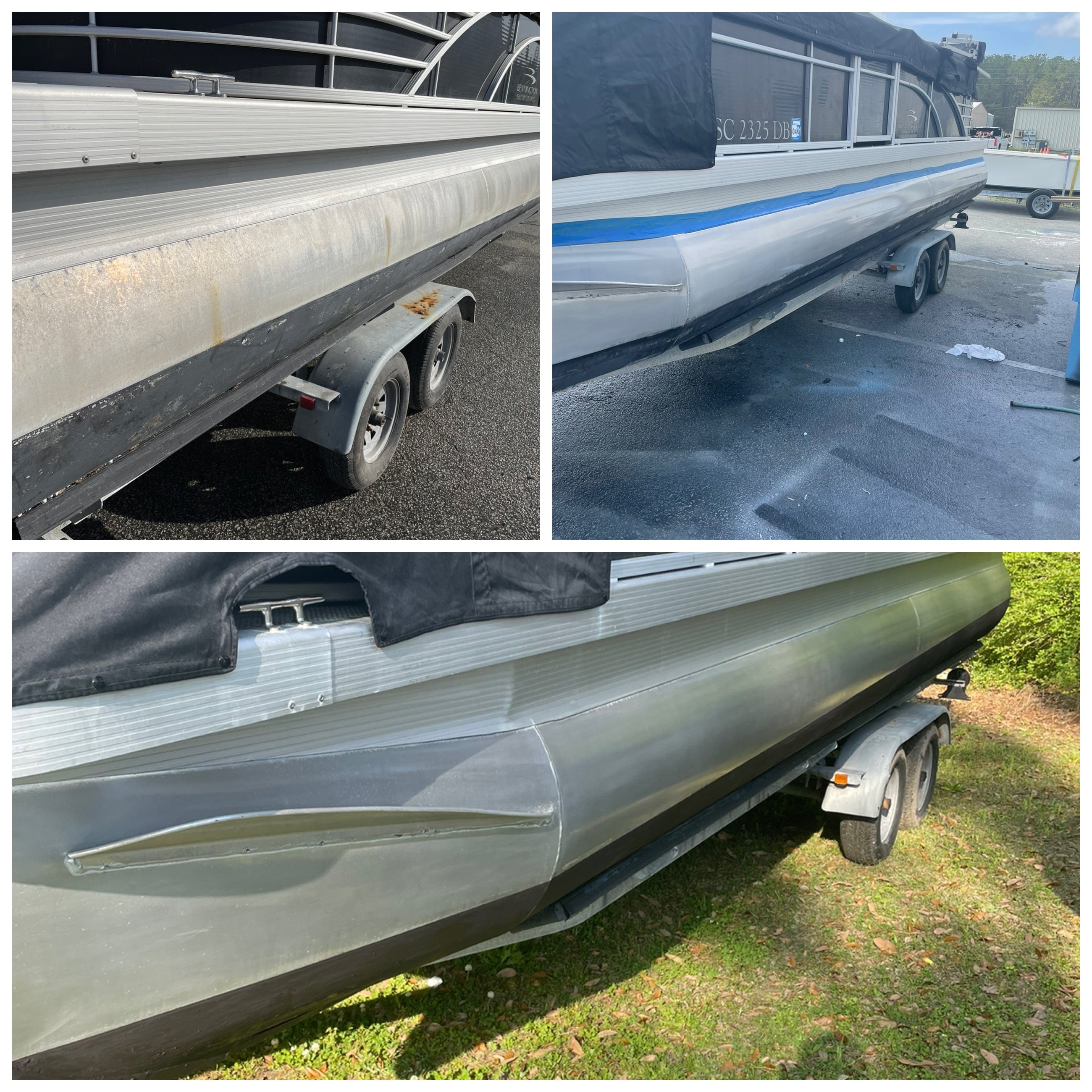
Gelcoat is the outer skin of a fiberglass boat — the layer that gives it color, gloss, and protection against water intrusion. Over time, UV exposure, impact, and weathering cause chips, cracks, crazing, and oxidation. The good news: most gelcoat damage is repairable without a full repaint, and a quality topcoat can restore a like-new finish when gelcoat is too far gone to restore.
Types of Gelcoat Damage
-
Chips and gouges — impact damage from docks, rocks, or debris; typically localized and easy to fill
-
Spider cracks (crazing) — fine stress cracks radiating from a point of impact or flex; may indicate structural flex beneath
-
Oxidation — chalky, dull surface caused by UV breakdown of the gelcoat resin; the most common issue on older boats
-
Deep scratches — through the gelcoat into the laminate; require filling before finishing
When to Repair Gelcoat vs. Paint Over It
Gelcoat repair works best when damage is localized and the surrounding gelcoat is still in good condition. If the gelcoat is heavily oxidized, crazed across large areas, or the color match is too difficult, painting over it with a quality marine topcoat is the better long-term solution.
Repair gelcoat when: damage is small and isolated, surrounding gelcoat is glossy and sound, and color matching is feasible.
Paint over gelcoat when: oxidation or crazing covers large areas, the boat has been previously painted, or you want a color change with a more durable finish.
Gelcoat Repair: Step-by-Step
-
Clean the area — wash with soap and water, then wipe with a wax-and-grease remover
-
Sand the damage — open chips and cracks with 80 grit to remove loose material and create a bonding surface
-
Fill deep damage — use a compatible filler or thickened epoxy for gouges deeper than the gelcoat layer
-
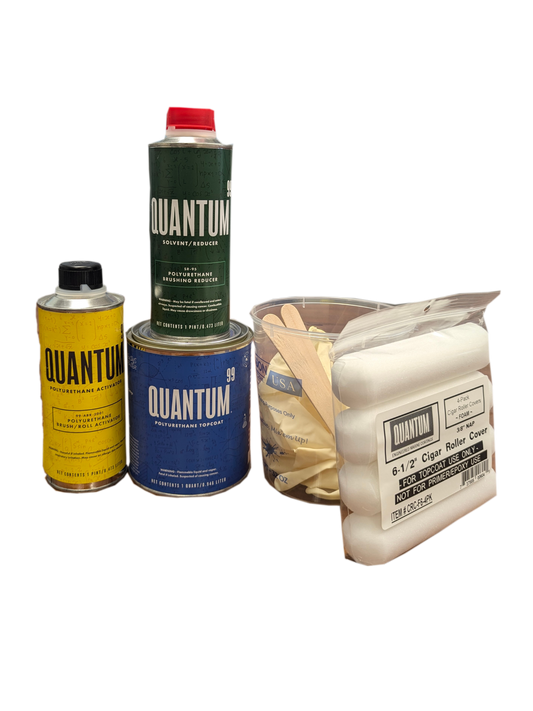
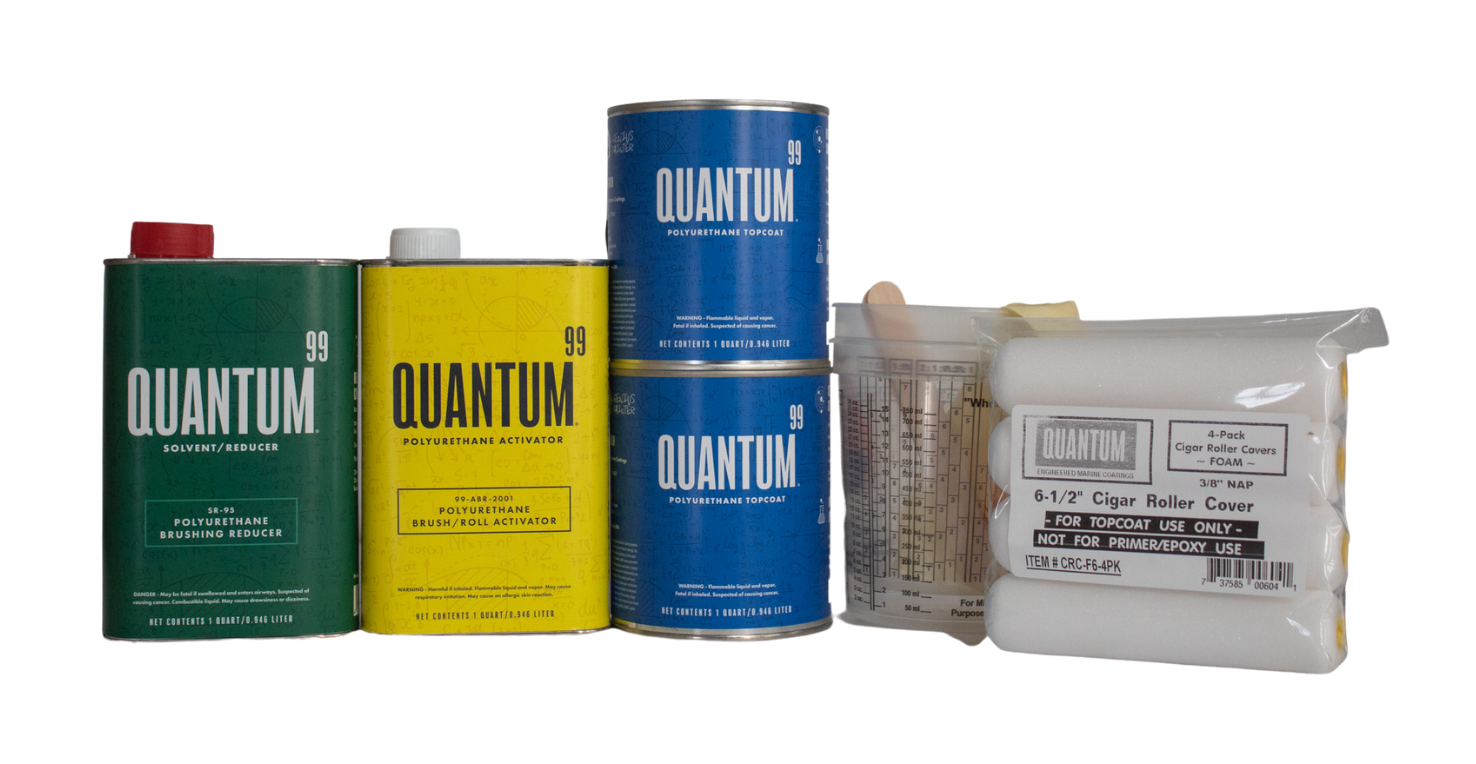
Apply gelcoat or topcoat — for spot repairs, Quantum99 2KA aerosol provides a professional two-part finish without mixing
-
Sand and polish — wet sand from 400 through 2000 grit, then compound and polish to blend with surrounding gelcoat
Painting Over Gelcoat: The Right System
When the damage or deterioration is too extensive for spot repair, a full topcoat system delivers a more durable and uniform result than gelcoat restoration. Quantum Paint's system for painting over gelcoat:
- Sand entire surface with 80–120 grit to remove oxidation and create adhesion
- Apply Quantum 45 Epoxy Primer — seals the gelcoat and provides a stable base for topcoat
- Apply Quantum99 Topcoat — two-part polyurethane for maximum gloss, UV resistance, and durability
Common Gelcoat Repair Questions
Can I use spray paint on gelcoat?
Standard rattle cans won't hold up in a marine environment. Quantum99 2KA is a true two-part aerosol — it activates at the nozzle for a proper 2K cure that bonds to gelcoat and resists UV, fuel, and salt water.
How do I match gelcoat color?
Exact color matching is difficult on aged gelcoat because the original color has faded. For spot repairs, feathering the edges and polishing aggressively helps blend. For larger areas, a full topcoat in a solid color is often a cleaner result than trying to match faded gelcoat.
How long does a gelcoat repair last?
A properly executed repair with a two-part topcoat can last 5–10 years. The key variables are surface prep quality and UV exposure. Keeping the boat covered when not in use significantly extends finish life.